World Liver Day 2026: Liver Disease in Children — The Signs We Often Miss
By Dr. Anil Siddharth Tambe
Pediatric Gastroenterologist & Hepatologist | Mumbai
Why Talk About Liver Disease in Children?
When we think of liver disease, we usually associate it with adults. But the reality is very different.
Children can develop serious liver diseases—even in the first few months of life.
What makes this more concerning is that early symptoms are often subtle, overlooked, or mistaken for common childhood issues.
On World Liver Day (19 April), this is a reminder that
👉 early recognition can change outcomes—and even save lives.
What Does the Liver Do in Children?
The liver plays a vital role in a child’s growth and development:
- Processes nutrients from food
- Helps digestion (through bile production)
- Supports immunity
- Produces essential proteins (including clotting factors)
- Removes toxins from the body
When the liver is affected, multiple systems in the body can be impacted.
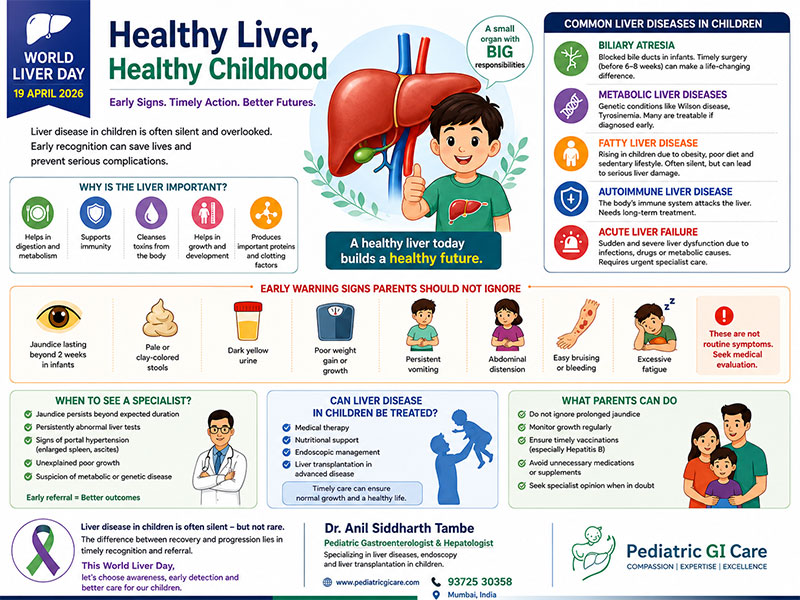
Common Liver Diseases in Children
Liver disease in children is not rare. Some important conditions include:
1. Biliary Atresia (Infants)
- A condition where bile ducts are blocked or absent
- One of the most common causes of liver failure in infants
- Requires early surgery or liver transplant
👉 Timely diagnosis (before 6–8 weeks) significantly improves outcomes
2. Metabolic Liver Diseases
- Examples: Wilson disease, Tyrosinemia
- Often present with unusual symptoms or delayed diagnosis
- Many are treatable if detected early
3. Fatty Liver Disease in Children
- Increasing rapidly due to:
- Childhood obesity
- Sedentary lifestyle
- Processed food intake
👉 Often silent initially, but can progress to serious liver damage
4. Autoimmune Liver Disease
- Body’s immune system attacks the liver
- Can present as:
Persistent jaundice
Abnormal liver tests
- Requires long-term treatment
5. Acute Liver Failure
- Sudden and severe liver dysfunction
- Can occur due to infections, drugs, or metabolic causes
- Requires urgent Liver specialist care
Early Warning Signs Parents Should Not Ignore
Many liver diseases in children present quietly.
🚨 Watch for these signs:
- Jaundice lasting beyond 2 weeks in infants
- Pale or clay-colored stools
- Dark yellow urine
- Poor weight gain or growth
- Abdominal distension
- Persistent vomiting
- Easy bruising or bleeding
- Excessive fatigue in older children
👉 These are not “routine” symptoms and need medical evaluation.
When Should a Child Be Referred?
Early referral to a pediatric hepatologist is crucial when:
- Jaundice persists beyond expected duration
- Liver enzymes remain elevated
- There are signs of portal hypertension (enlarged spleen, ascites)
- Growth failure is unexplained
- There is suspicion of metabolic disease
Delays in referral are one of the most common reasons for poor outcomes.
Can Liver Disease in Children Be Treated?
Yes—and outcomes are often excellent when diagnosed early.
Management options include:
👉 Today, pediatric liver transplantation offers excellent survival and quality of life, especially when done at the right time.
What Parents Can Do
Simple steps can make a big difference:
- Do not ignore prolonged jaundice
- Monitor your child’s growth regularly
- Ensure timely vaccinations (especially Hepatitis B)
- Avoid unnecessary medications
- Seek specialist opinion when symptoms persist
Final Takeaway
Liver disease in children is often silent—but not rare.
The difference between recovery and progression often lies in timely recognition and referral.
On this World Liver Day, let’s shift the focus:
👉 From late diagnosis → to early detection
👉 From missed signs → to informed action
About the Author
Dr. Anil Siddharth Tambe
Pediatric Gastroenterologist & Hepatologist