
By Dr. Anil Tambe – Pediatric Gastroenterologist & Hepatologist, Mumbai
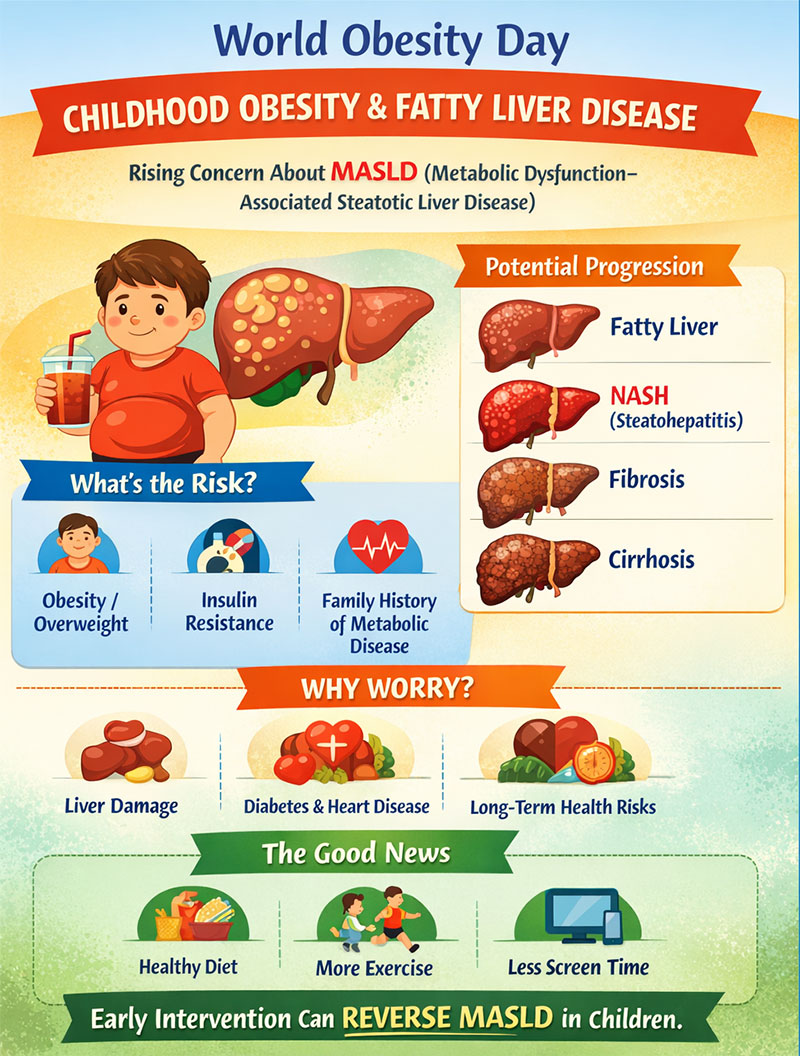
Childhood obesity is rising across the world, and India is seeing the same trend. What many parents may not realize is that obesity in children can affect more than just weight. One of the most important complications is fatty liver disease.
Today this condition is called Metabolic Dysfunction–Associated Steatotic Liver Disease (MASLD), previously known as Non-Alcoholic Fatty Liver Disease (NAFLD).
On World Obesity Day, it is important to understand how excess weight in children can impact the liver and long-term health.
MASLD occurs when excess fat accumulates in the liver due to metabolic problems such as obesity, insulin resistance, and abnormal cholesterol levels.
In recent years, MASLD has become one of the most common causes of chronic liver disease in children and adolescents.
Many children with fatty liver do not have obvious symptoms, which means the condition is often discovered incidentally during routine blood tests or ultrasound scans.
Fatty liver in children is not always harmless. The condition can progress through several stages:
In addition to liver problems, children with MASLD are also at increased risk of:
This makes early detection extremely important.
Certain children have a higher chance of developing fatty liver disease.
Risk factors include:
In many cases, a persistently elevated ALT level may be the first clue that a child has fatty liver.
Evaluation usually begins with:
Further evaluation may be required in some cases to determine the severity of liver involvement and rule out other causes of liver disease.
The encouraging news is that early-stage fatty liver disease in children can often be reversed.
The most effective treatment remains lifestyle modification, including:
Even modest weight loss can significantly improve liver health and metabolic outcomes.
Childhood obesity should not be viewed only as a cosmetic or lifestyle issue. It can affect several organs, including the liver.
Recognizing fatty liver early gives families and healthcare providers a valuable opportunity to prevent long-term liver disease and metabolic complications.
With timely lifestyle changes and appropriate medical guidance, many children can achieve significant improvement in liver health.
Parents should consider evaluation if their child:
Early consultation with a specialist can help determine the best approach for evaluation and management.
Dr. Anil Tambe
Pediatric Gastroenterologist & Hepatologist
Mumbai
Dr. Tambe specializes in the diagnosis and management of digestive and liver diseases in children, including fatty liver disease, chronic liver disease, and pediatric liver transplantation.
Can fatty liver occur in children?
Yes. Fatty liver disease is increasingly seen in children with obesity or metabolic risk factors.
Can fatty liver in children be reversed?
Yes. Early-stage fatty liver often improves with healthy diet, physical activity, and weight management.
Which test detects fatty liver in children?
Blood tests for liver enzymes and ultrasound are commonly used for screening.